
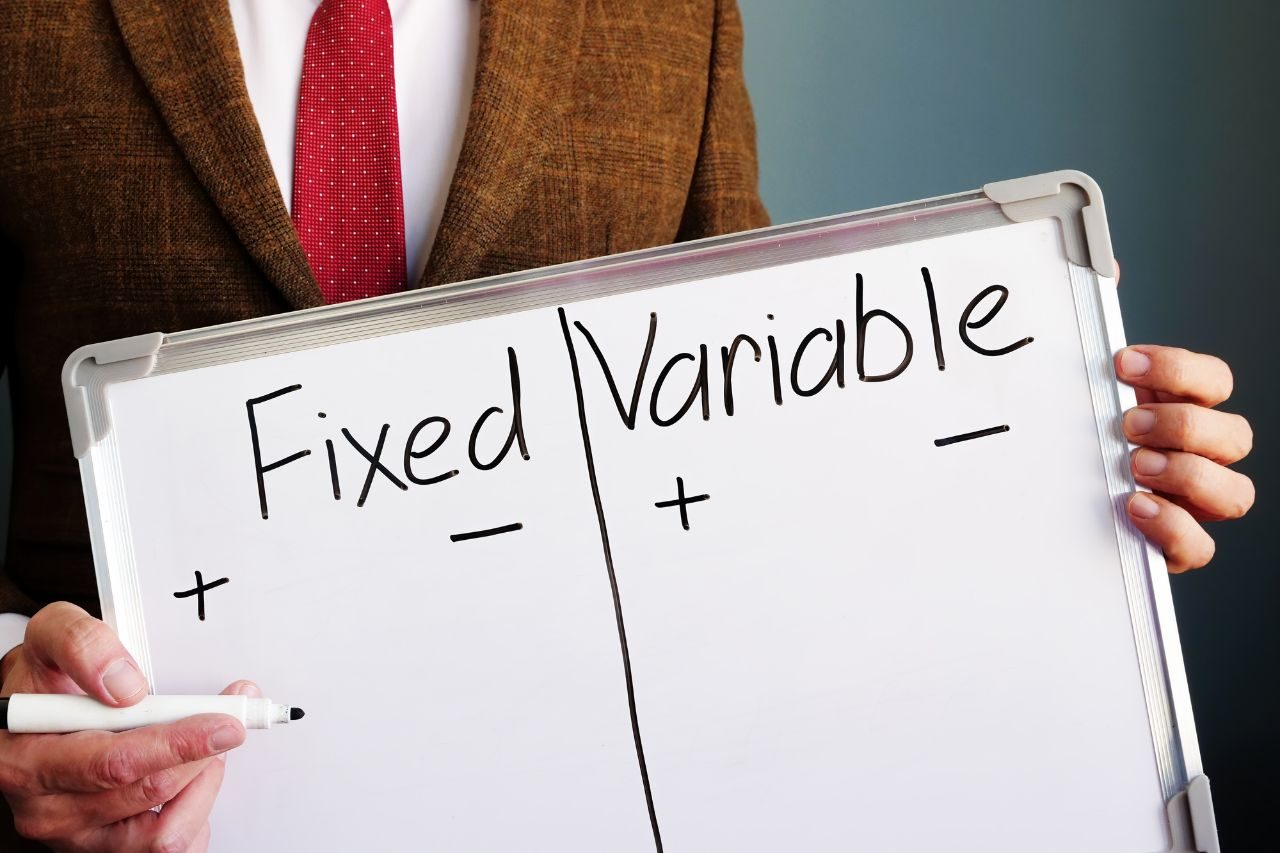
Choosing between a fixed and a variable rate is one of the biggest decisions you’ll make with a mortgage. Neither is always cheaper. The right choice depends on your budget, your plans and how much uncertainty you’re comfortable with.
How each one works
A fixed rate stays the same for your whole term, usually five years. Your payment never changes, so it’s easy to budget around.
A variable rate moves with your lender’s prime rate. When the Bank of Canada changes its rate, prime usually follows. Depending on your mortgage, either your payment changes, or your payment stays the same and the split between interest and principal changes.
| Fixed rate | Variable rate | |
|---|---|---|
| Your rate | Locked for the term | Moves with prime |
| Your payment | Predictable | Can change |
| Penalty to break early | Often the higher of three months’ interest or the IRD | Usually three months’ interest |
| Suits you if | You want certainty | You can absorb changes and may move or refinance |
The penalty difference matters more than people think
Many people choose a rate based only on today’s number. But if there’s a chance you’ll sell, move or refinance before your term ends, the penalty can matter more. Variable-rate penalties are usually much smaller, which gives you more flexibility.
Questions to ask yourself
Could your budget handle a higher payment if rates went up? Are you likely to move or refinance in the next few years? Would you rather know exactly what you’ll pay, even if it might cost a little more?
If your answers lean towards certainty, a fixed rate is often the better fit. If you value flexibility and have room in your budget, a variable rate may be worth a closer look.
Other options
Some lenders offer a hybrid mortgage, with part fixed and part variable. Others let you convert a variable rate to fixed partway through your term. A mortgage professional can compare these side by side for your situation.